Thank Your Local Building Department
Send a short thank-you message to your local building or code department. Acknowledging the team's contribution to community safety is a simple and meaningful way to mark the day.
Building and Code Staff Appreciation Day is observed every September 1 in the United States to recognize the professionals who help keep buildings, infrastructure and communities safe.
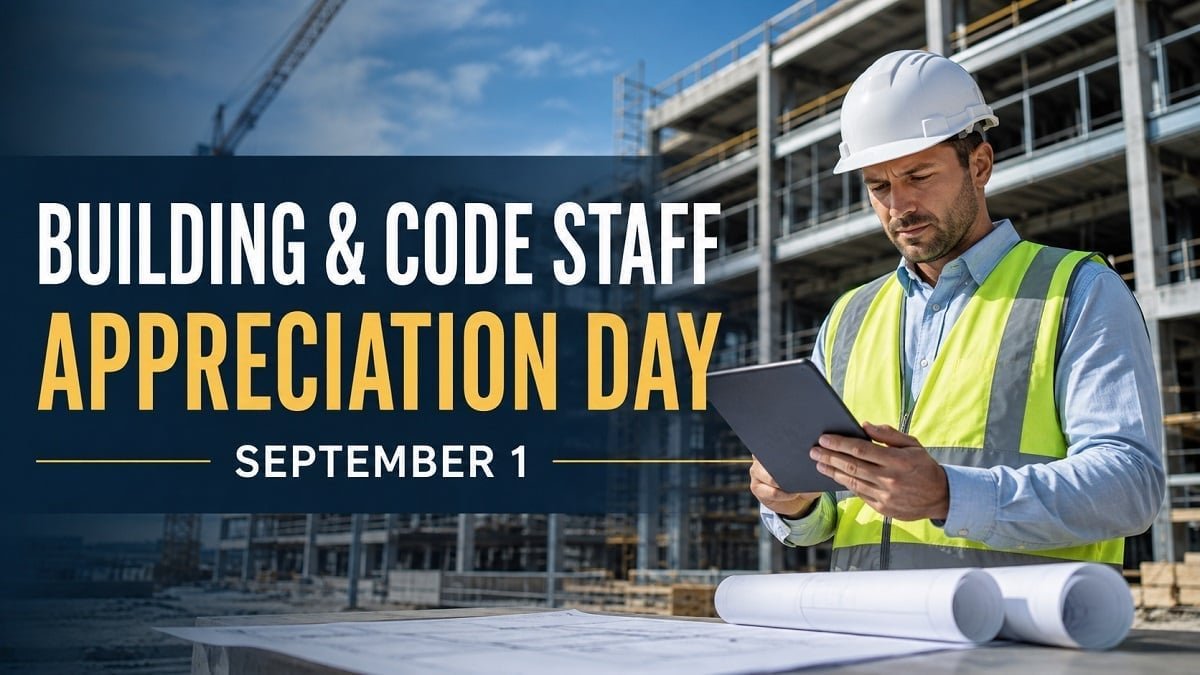
Building and Code Staff Appreciation Day is observed annually on September 1 to recognize the building inspectors, code enforcement officers, plan reviewers, permit technicians and other professionals who help protect public safety through building standards and inspections.
Their work often happens behind the scenes. Before a new home, office, school or commercial building can be safely occupied, building and code professionals may review plans, check permits, inspect construction and verify compliance with requirements covering structural systems, electrical work, plumbing, mechanical systems, fire safety, accessibility and energy.
Building and Code Staff Appreciation Day gives residents, businesses, contractors and public agencies an opportunity to recognize these professionals and better understand how building codes contribute to safer and more resilient communities.
Origins, development, and the events that shaped this observance.
The exact origin and founder of Building and Code Staff Appreciation Day are not clearly documented. Modern observance calendars recognize September 1 as the annual date, and municipalities across the United States have issued proclamations recognizing the work of local building and code departments.
Although the appreciation day itself has an uncertain origin, the profession it recognizes has very deep historical roots.
One of the earliest known examples of building regulation appears in the Code of Hammurabi in ancient Babylon around 1758 B.C. Rather than providing modern construction specifications, these laws established accountability for builders when poorly constructed structures caused harm.
Building regulation later became increasingly important as towns and cities expanded. Early building regulations appeared in what became the United States during the colonial period, with rules addressing concerns such as roofing materials and fire safety.
Major urban disasters also influenced the evolution of safety requirements. The Great Chicago Fire of 1871, for example, demonstrated the danger created by dense development and widespread use of combustible building materials. Building codes continued to develop as governments and construction professionals sought better ways to protect life and property.
A major modern milestone occurred in 1994, when the International Code Council was established to develop a coordinated set of national model construction codes by bringing together three regional model-code organizations.
The first edition of the International Building Code (IBC) was published in 2000. Today, the IBC is used or adopted across all 50 U.S. states as well as the District of Columbia and several U.S. territories, although individual jurisdictions may amend model codes when adopting them.
Building and Code Staff Appreciation Day places the people who administer and enforce these safety requirements in the spotlight, recognizing a workforce whose everyday decisions affect the buildings in which people live, work, learn and gather.
Practical ways to observe the day thoughtfully and meaningfully.
Building and Code Staff Appreciation Day is an opportunity to recognize professionals whose work may go unnoticed when everything is working properly. Residents, contractors, businesses and public agencies can take part through simple activities that show appreciation and increase awareness of building safety.
Send a short thank-you message to your local building or code department. Acknowledging the team's contribution to community safety is a simple and meaningful way to mark the day.
Municipalities, companies and community organizations can feature building inspectors, plan reviewers, permit staff and code officers on websites, newsletters or social media.
Arrange a breakfast, lunch or small workplace gathering for building and code staff. It gives teams an opportunity to celebrate their work together.
Take time to understand why permits, inspections and building codes exist. Learning about structural, electrical, plumbing and fire-safety requirements can provide a new appreciation for the professionals responsible for applying them.
Building departments can invite residents, students or local contractors to meet staff, learn about inspections and ask questions about permits and building safety.
Employers can recognize staff by supporting certification, continuing education or technical training that helps building professionals remain current with evolving codes and construction practices.
Memorable details and useful context connected with Building and Code Staff Appreciation Day.
Building codes affect everyday life in ways most people rarely notice. Here are some quick facts about the history and work behind building safety.
One of the earliest known examples dates to ancient Babylon around 1758 B.C., showing that construction accountability is far from a modern idea.
Their work can involve plan review, permits, code interpretation, site inspections and oversight of construction or renovation projects.
Code professionals may work with structural, electrical, mechanical, plumbing, fire-safety, accessibility and energy requirements.
The International Code Council was created to bring separate regional model-code systems together into a coordinated national approach.
The first International Building Code was published in 2000 as part of a coordinated approach to modern building safety.
The International Building Code is used or adopted in all 50 U.S. states, although jurisdictions may modify it to suit local laws and conditions.
Building safety professionals can assist with inspections and damage assessments following events such as hurricanes, earthquakes, floods and fires.
Important moments that shaped the day and its place in the calendar.
The Code of Hammurabi in ancient Babylon includes some of the earliest known laws holding builders accountable for the quality and safety of their work.
Colonial communities begin introducing building requirements addressing issues such as roofing materials, chimneys and fire safety.
The Great Chicago Fire demonstrates the dangers associated with dense wooden construction and contributes to broader attention to safer urban building practices.
The International Code Council is formed with the goal of creating a single coordinated family of national model construction codes.
The first International Building Code is released, providing a coordinated model code designed to protect public health and safety in the built environment.
September 1 becomes recognized as the annual date for appreciating building inspectors, code officials and other building safety professionals. The precise founder and starting year remain undocumented.
Helpful answers about the date, meaning, and observance.
Building and Code Staff Appreciation Day is observed every year on September 1.
It is an annual U.S. observance recognizing professionals who review plans, issue permits, inspect construction and help ensure buildings comply with adopted safety standards.
The day recognizes building inspectors, code enforcement officers, plan reviewers, permit technicians and specialists working with structural, electrical, plumbing, mechanical, housing and fire-safety requirements.
The original founder is not clearly documented. Reliable observance sources acknowledge that the precise origins of the day remain uncertain.
The day highlights professionals whose work helps reduce safety risks and ensure that homes, workplaces and public buildings meet adopted requirements designed to protect occupants.
Building inspectors examine construction or renovation work to determine whether it complies with applicable building requirements. Their work may involve structural, electrical, plumbing, mechanical and other safety systems.
A building code is a collection of minimum requirements designed to protect health, safety and welfare in the construction and use of buildings.
You can thank a local inspector, send an appreciation note, recognize a building department publicly, organize a staff lunch or learn more about how building codes protect your community.
No. It is an appreciation observance rather than a U.S. federal public holiday. Municipalities and organizations may recognize it through proclamations, workplace activities and community messages.
Building codes establish minimum safety requirements intended to reduce risks associated with structural failure, fire, unsafe systems and other hazards in the built environment.
 Featured
Ginger Cat Appreciation Day is observed every September 1 to celebrate orange and ginger cats while encouraging appreciation, responsible pet care, adoption and support for animal rescue.
Read the story Featured
Emma M. Nutt Day is observed on September 1 to honor the pioneering woman who became the world’s first female telephone operator on this date in 1878.
Read the story