Bake Classic Popovers
Make a batch of traditional popovers using eggs, milk, flour, butter, and salt. High heat and the moisture-rich batter are central to creating their characteristic rise.
National Cherry Popover Day is an informal U.S. food observance held every September 1 to celebrate cherry popovers—light, hollow egg-batter pastries paired with cherries, cherry sauce, preserves, or filling. The observance's founder and starting year have not been reliably documented.
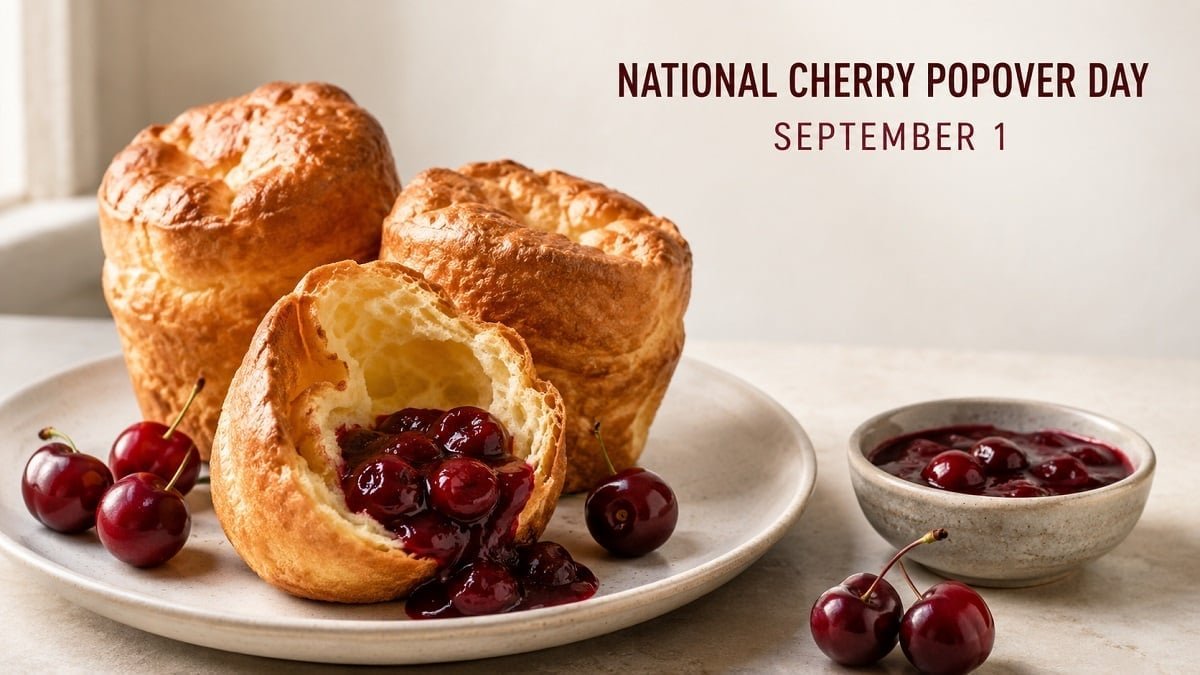
National Cherry Popover Day is observed annually on September 1. Current holiday calendars consistently associate the date with cherry popovers, a sweet variation or serving style of the American popover. Checkiday, Days of the Year, Holiday Insights, and Awareness Days all list September 1 as the fixed date.
A popover is a light baked preparation made from a thin batter based largely on eggs, milk, and flour. High oven heat turns moisture in the batter into steam, producing the dramatic rise and hollow interior associated with a well-made popover. Cherries can be served as a sauce, preserve, topping, or other sweet accompaniment.
The observance is primarily associated with the United States and belongs to the tradition of informal American food days rather than government holidays. It gives home bakers, food enthusiasts, families, bakeries, and restaurants an occasion to prepare or enjoy the pastry and explore the longer history of American popovers. It is not one of the United States' federal holidays.
A shortened name, Cherry Popover Day, is also genuinely used by some publishers, including National Today, although National Cherry Popover Day is the stronger primary keyword and the name used by several other current calendar sources.
Origins, development, and the events that shaped this observance.
The history of National Cherry Popover Day itself is much less certain than the history of the popover. Multiple contemporary calendar sites place the observance on September 1, but no authoritative source located during this research identifies a verified creator, sponsoring organization, founding year, first celebration, or documented reason for selecting September 1. Holiday Insights likewise reports that it could not determine who created the observance or why. The exact origin, founder or starting year is not reliably documented.
Claims that September 1 was chosen because of cherry season should therefore be treated as speculation rather than history. One current competitor suggests seasonal timing as a possible explanation, but does not establish it with a source. The same page claims the observance appeared online around 2017; however, a clearly dated cooking post explicitly identifying September 1 as National Cherry Popover Day was published in 2012, so 2017 cannot safely be presented as the beginning of the observance.
The culinary history can be documented much more confidently. The Oxford English Dictionary dates its earliest evidence for the noun “popover” to 1850, in a letter by E. E. Stuart. That establishes that the word was already in use in the United States by the middle of the nineteenth century.
Another important primary source is Mary F. Henderson's Practical Cooking and Dinner Giving. The digitized book carries an 1877 title-page date, a copyright notice dated 1876, and a preface signed in St. Louis in 1876. It contains a recipe titled “Breakfast Puffs, or Pop-overs (Mrs. Hopkins)”, made with milk, flour, eggs, and salt and baked in heated, greased pans or even teacups. This is more precise than the common online shorthand that simply calls it an “1876 cookbook.”
Popovers later became part of an enduring New England dining tradition. The U.S. National Park Service records that Thomas and Nellie McIntire added popovers to the menu at Jordan Pond House in Maine in 1895. The restaurant at what is now Acadia National Park continues the tea-and-popover tradition today.
As for the special day, dated online evidence shows that it was already circulating by September 1, 2012, and KALW public radio included National Cherry Popover Day in its September 1 almanac in 2015. These references demonstrate that the observance predates some recent calendar sites, but they do not establish when the celebration was originally created.
Today, National Cherry Popover Day remains an informal food observance rather than an official U.S. public holiday. Its best-supported meaning is simple: September 1 is an occasion for enjoying cherry popovers and learning about the unusual American pastry behind them.
Practical ways to observe the day thoughtfully and meaningfully.
National Cherry Popover Day is easiest to observe through baking, tasting, sharing, and learning about the history behind the pastry.
Make a batch of traditional popovers using eggs, milk, flour, butter, and salt. High heat and the moisture-rich batter are central to creating their characteristic rise.
Bake the popovers first and serve them warm with cherry preserves, cherry sauce, or a homemade cherry compote. Keeping the fruit separate also lets everyone choose how much cherry topping they want.
If you have both, bake a few popovers in a dedicated pan and others in a standard muffin tin and compare their shape and height. Popovers have historically been baked in several kinds of individual baking vessels; Henderson's nineteenth-century recipe even suggested deep gem pans or teacups.
Read Mary F. Henderson's nineteenth-century “Breakfast Puffs, or Pop-overs” recipe and compare its simple method with a modern recipe. It is an easy way to turn the food holiday into a small culinary-history project.
Serve warm popovers with several cherry options—fresh fruit where available, preserves, compote, or sauce—and invite guests to assemble their preferred version.
Ask a local bakery whether it makes popovers or could offer a cherry-inspired version for September 1. Sharing the reason for the request can also introduce the observance to people who have never heard of it.
Learn about Jordan Pond House at Acadia National Park, where popovers have been part of the dining tradition since the 1890s. The National Park Service provides useful historical material about the restaurant and its popovers.
Memorable details and useful context connected with National Cherry Popover Day.
The most interesting facts about this observance come from the surprisingly well-documented history and baking science of the popover itself.
The Oxford English Dictionary's earliest evidence for popover comes from an 1850 letter by E. E. Stuart.
Henderson's historic popover recipe called for milk, flour, eggs, and salt.
A popover's moist batter produces steam rapidly in a hot oven, helping push the pastry upward and create its hollow structure.
The 1870s recipe suggested roll pans, deep gem pans, or even teacups, while the National Park Service describes popovers being baked in muffin tins.
Thomas and Nellie McIntire introduced popovers to the Jordan Pond House menu in 1895.
The original Jordan Pond House burned in 1979, but a replacement was completed in 1982 and the famous popover tradition continued.
National Cherry Popover Day is an informal food observance; it does not appear among the 12 federal holidays recognized by the U.S. government.
Important moments that shaped the day and its place in the calendar.
The Oxford English Dictionary traces its earliest evidence for the word popover to an 1850 letter written by E. E. Stuart.
Mary F. Henderson's Practical Cooking and Dinner Giving was copyrighted in 1876 and carries an 1877 title-page date. Its breakfast section includes a recipe specifically called “Breakfast Puffs, or Pop-overs.”
According to the U.S. National Park Service, Thomas and Nellie McIntire added popovers and other dishes to the Jordan Pond House menu in 1895, helping establish a New England popover tradition that survives today.
The original Jordan Pond House burned in 1979. The present restaurant building was constructed in 1982, and the site's longstanding tea-and-popover tradition continued.
A dated cooking post published on September 1, 2012 explicitly identified the date as National Cherry Popover Day and prepared cherry popovers for the occasion. This proves the observance was circulating by 2012, but does not prove that 2012 was its first celebration.
KALW published its September 1 almanac under the title “National Cherry Popover Day-KALW Almanac-9/01/15,” providing another independently dated record of the observance.
Helpful answers about the date, meaning, and observance.
It is observed every year on September 1. Major current special-day calendars consistently use this fixed date.
It falls on Tuesday, September 1, 2026. The observance remains fixed on September 1 rather than moving to a particular weekday.
It is an informal American food observance celebrating cherry popovers. People commonly mark it by baking popovers and serving them with cherries, preserves, sauce or another cherry accompaniment.
No verified founder has been identified. The exact origin, founder or starting year is not reliably documented.
The first celebration has not been reliably established. A clearly dated online reference proves that the observance was already being marked by September 1, 2012, but that does not mean it originated that year.
No reliable source located in this research explains why September 1 was chosen. Seasonal explanations appearing on some calendar sites are speculative and should not be presented as established history.
Its exact place of origin is not reliably documented, although it is generally treated as a U.S. food observance. The underlying popover has a long history in American cooking.
A popover is a light, hollow baked item made from a thin egg-rich batter. Steam generated during baking helps the batter rise dramatically above the baking cup.
No, a dedicated popover pan is not strictly necessary. Historical recipes used deep gem pans and even teacups, and muffin tins are also used for popovers.
No, it is not a U.S. federal holiday. USAGov lists 12 recognized federal holidays, and National Cherry Popover Day is not among them.
It is primarily classified as a United States food observance, although anyone can participate. Current international special-day websites make the observance discoverable outside the United States, but there is no evidence that it is an official worldwide observance.
 Featured
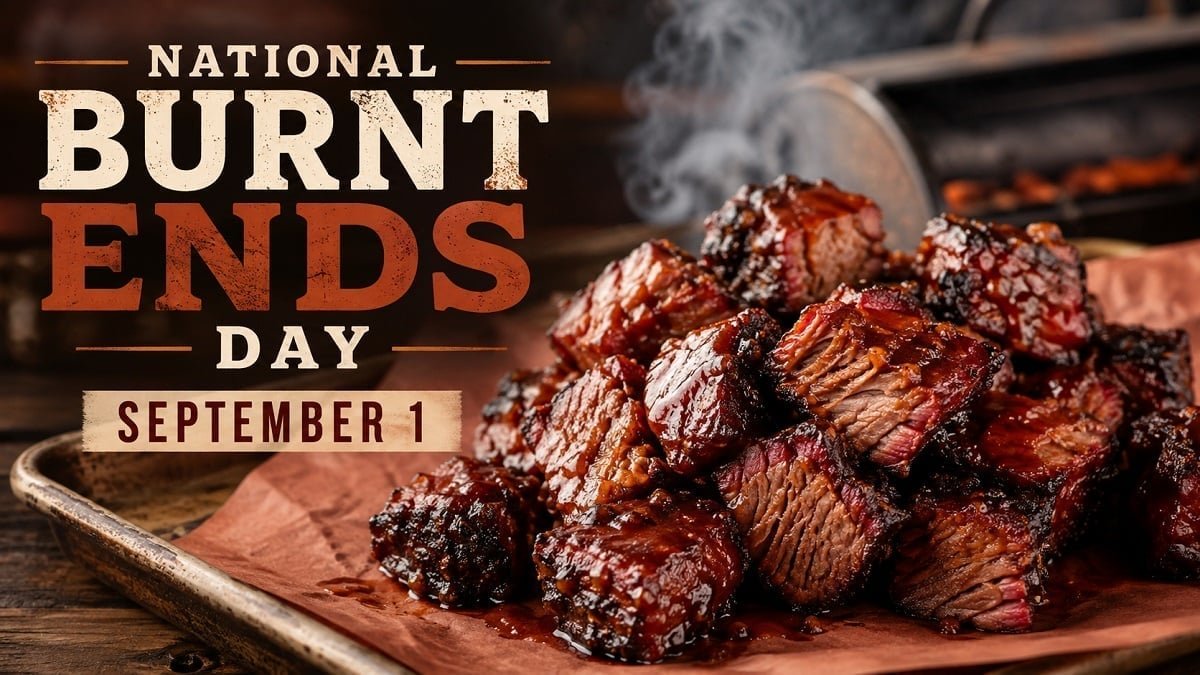
National Burnt Ends Day is observed every September 1 to celebrate burnt ends, the smoky, bark-covered brisket specialty closely associated with Kansas City barbecue.
Read the story