Order Authentic Burnt Ends
Visit a barbecue restaurant that serves traditional brisket burnt ends. If possible, try them on their own first so you can appreciate the bark, smoke and texture.
National Burnt Ends Day is observed every September 1 to celebrate burnt ends, the smoky, bark-covered brisket specialty closely associated with Kansas City barbecue.
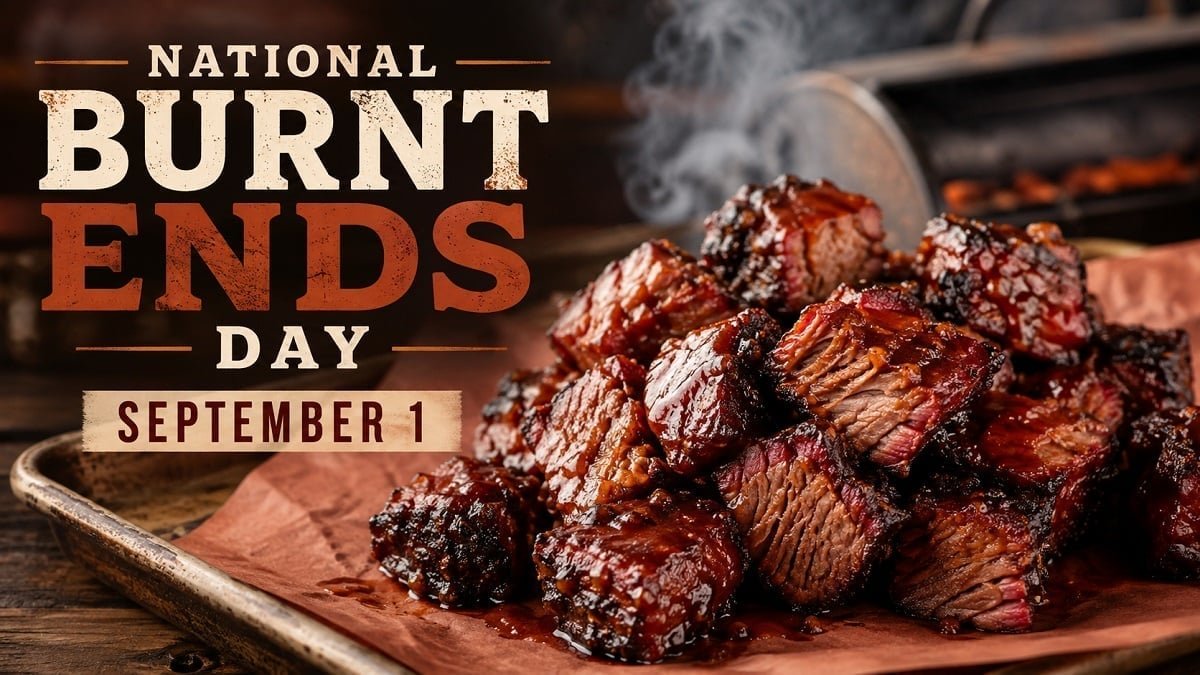
National Burnt Ends Day is celebrated annually on September 1 in the United States, honoring one of Kansas City barbecue’s most recognizable specialties: burnt ends. The observance was founded in 2021 by the American Royal and Kansas City’s Zarda Bar-B-Q to celebrate Kansas City-style barbecue and bring greater attention to this distinctive local food tradition.
Burnt ends are deeply smoked, flavorful pieces of brisket known for their combination of crisp bark, rendered fat and tender meat. Modern versions are commonly cut from the fattier point portion of a brisket and may be served on their own, sauced, piled into sandwiches or incorporated into other dishes.
The day is about more than one barbecue dish. It also recognizes Kansas City’s long barbecue tradition, the pitmasters who developed it and the food culture that turned pieces once treated as scraps into a celebrated menu item.
Origins, development, and the events that shaped this observance.
The story of National Burnt Ends Day begins long before the observance itself.
Kansas City’s modern barbecue tradition can be traced to the early twentieth century. Visit KC identifies Henry Perry as a foundational figure in the city’s barbecue history, noting that he was serving barbecue from an outdoor pit beside a streetcar barn by the early 1920s. Other families and pitmasters later developed their own styles, helping establish Kansas City as an important American barbecue center.
Burnt ends emerged from this wider barbecue culture. Historically, the crispy, fatty and heavily barked portions from smoked brisket were not always considered premium cuts. Kansas City PBS's Flatland reports that such pieces were sometimes treated as scraps, eaten by cooks, added to beans or given away rather than sold as a featured dish.
Arthur Bryant’s Barbecue became particularly important to the burnt-ends story. Visit KC records that the restaurant passed pieces of brisket ends to customers waiting in line. What had once been treated casually eventually became one of the dishes most closely identified with Kansas City barbecue.
Burnt ends gained wider attention in 1972, when Kansas City-born writer Calvin Trillin praised the “burned edges” available at Arthur Bryant’s in an article for Playboy. Kansas City PBS credits the article with helping bring much greater attention to what had previously been a local barbecue treat.
Decades later, the food received its own national observance. In 2021, the American Royal and Zarda Bar-B-Q worked together to establish National Burnt Ends Day. National Day Calendar proclaimed September 1, 2021 as the first observance, with the date to be celebrated annually thereafter.
The American Royal has continued to connect the celebration with Kansas City barbecue and its non-profit mission supporting food and agriculture education. Recent observances have included special burnt-end promotions that help support the organization’s scholarship programs.
Practical ways to observe the day thoughtfully and meaningfully.
National Burnt Ends Day is an ideal occasion to explore Kansas City barbecue, try a regional specialty and learn more about the traditions behind smoked brisket. Whether you visit a barbecue restaurant or celebrate at home, there are plenty of flavorful ways to participate.
Visit a barbecue restaurant that serves traditional brisket burnt ends. If possible, try them on their own first so you can appreciate the bark, smoke and texture.
Smoke a brisket and use the point portion to prepare burnt ends. Cut the meat into pieces and finish them according to a trusted barbecue recipe.
Learn about Henry Perry, Arthur Bryant and other pitmasters who helped shape Kansas City’s distinctive barbecue culture.
Turn burnt ends into a hearty sandwich with your preferred barbecue sauce and simple accompaniments, or see how a local pitmaster serves the dish.
Try burnt ends with several sauces and notice how sweet, spicy, tangy or smoky flavors change the experience. Kansas City sauce is traditionally thick and often balances sweet and spicy notes.
Enjoy burnt ends with friends or family and share your National Burnt Ends Day meal using #NationalBurntEndsDay.
Memorable details and useful context connected with National Burnt Ends Day.
Burnt ends have traveled an unusual path from overlooked brisket pieces to one of Kansas City’s signature foods. Here are a few quick, verified facts.
Burnt ends are one of the foods most strongly associated with Kansas City’s famous barbecue tradition.
Arthur Bryant’s became known for passing brisket ends to customers while they waited rather than treating them as a premium menu item.
Good burnt ends combine smoky bark with rich, juicy meat rather than being pieces that have simply been scorched or ruined.
Modern burnt ends are commonly prepared from the fattier point portion of smoked beef brisket.
Calvin Trillin’s 1972 writing about Arthur Bryant’s “burned edges” helped introduce the Kansas City specialty to a wider audience.
The American Royal and Zarda Bar-B-Q established National Burnt Ends Day in 2021.
American Royal National Burnt Ends Day promotions have raised support for scholarship programs connected with food and agriculture education.
Important moments that shaped the day and its place in the calendar.
Henry Perry serves barbecue from an outdoor pit in Kansas City, helping establish a tradition later developed by generations of local pitmasters.
Arthur Bryant’s becomes closely associated with brisket burnt ends, passing the flavorful pieces to customers waiting for their meals.
Writer Calvin Trillin praises Arthur Bryant’s “burned edges” in a nationally published article, helping spread awareness beyond Kansas City.
The American Royal and Zarda Bar-B-Q establish a national food day dedicated to Kansas City-style burnt ends.
National Day Calendar proclaims September 1 as National Burnt Ends Day, beginning the annual observance.
The American Royal and its partners extend festivities across Labor Day weekend, with participating burnt-end sales supporting scholarship programs.
The American Royal, Zarda Bar-B-Q and Hy-Vee celebrate the fifth National Burnt Ends Day with Kansas City-area promotions benefiting the American Royal scholarship fund.
Helpful answers about the date, meaning, and observance.
National Burnt Ends Day is celebrated every year on September 1 in the United States.
It is an annual food observance celebrating burnt ends, a smoked brisket specialty strongly associated with Kansas City barbecue.
The American Royal and Zarda Bar-B-Q founded National Burnt Ends Day in 2021 to celebrate Kansas City-style barbecue and its famous burnt ends.
The first National Burnt Ends Day was observed on September 1, 2021 after the date was proclaimed by National Day Calendar.
Burnt ends are smoky, bark-rich pieces of barbecued brisket. Modern versions are commonly prepared from the fattier point portion and may be served alone, sauced or in sandwiches.
Burnt ends are strongly associated with Kansas City, Missouri, where they developed within the city’s barbecue tradition and became particularly connected with Arthur Bryant’s Barbecue.
Arthur Bryant’s is central to the documented history of burnt ends, but available historical sources do not establish a precise single inventor. The restaurant is known for giving brisket ends to waiting customers.
The name refers to the deeply smoked, bark-covered end pieces associated with brisket cooking. Properly prepared burnt ends should be flavorful and tender rather than simply burned.
Modern burnt ends are commonly made from the point, the fattier section of a beef brisket that develops rich flavor during smoking.
They may be eaten on their own, coated with barbecue sauce, served in sandwiches or incorporated into dishes such as beans and other barbecue-inspired meals.
Burnt ends developed within Kansas City’s long barbecue culture and became especially famous through Arthur Bryant’s and later national attention from writer Calvin Trillin.
No. National Burnt Ends Day is a food observance and is not a United States federal public holiday.