Play a Game of Chess
Set up a board and challenge a friend, family member or colleague. Play casually or use a chess clock if you want to make the match more competitive.
American Chess Day is observed every September 1 in the United States, celebrating chess, its rich American history and the strategy, concentration and creativity behind the game.
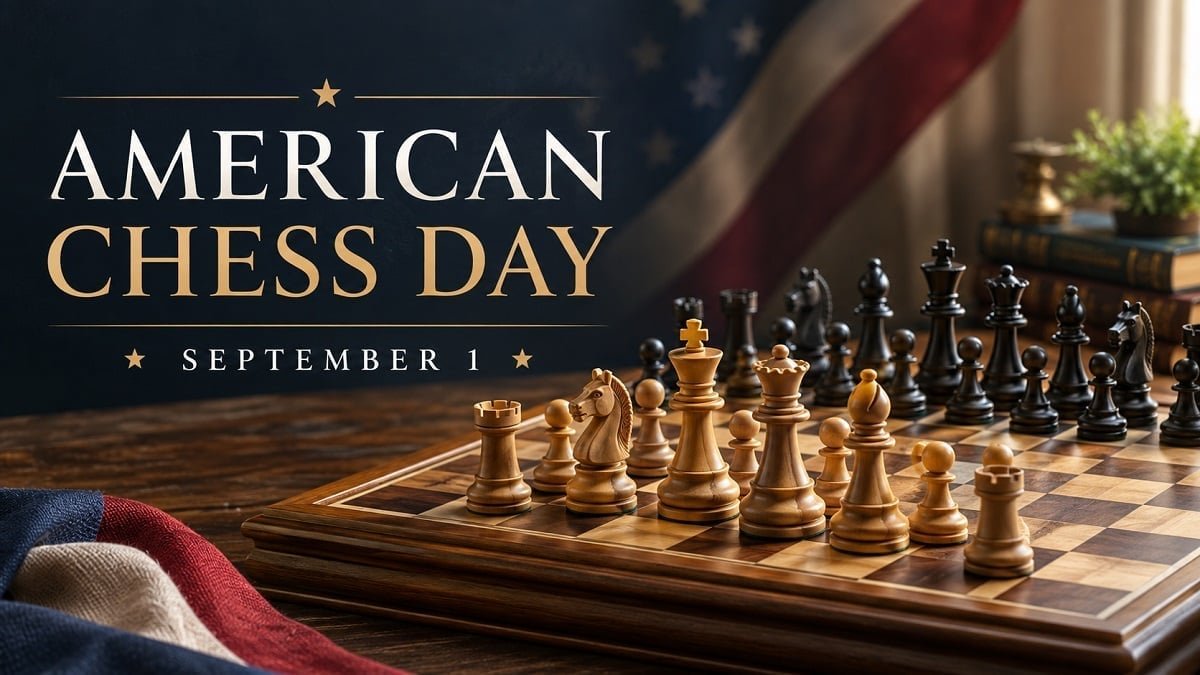
American Chess Day is observed on September 1 each year as a celebration of chess and the generations of players who have helped make the game part of American culture. The day gives beginners, casual players, students and experienced competitors an opportunity to play, learn and appreciate one of the world's most enduring strategy games.
Played between two opponents on a board of 64 squares, chess combines planning, pattern recognition, calculation and decision-making. American Chess Day is an ideal occasion to learn the rules, challenge a friend, join a chess club, study a famous game or introduce a new player to the board.
The observance also provides an opportunity to explore America's long connection with chess—from Benjamin Franklin and Paul Morphy to the establishment of the United States Chess Federation and Bobby Fischer's historic World Championship victory.
Origins, development, and the events that shaped this observance.
Chess developed from earlier games that emerged in the Indian subcontinent before spreading through Persia, the Islamic world and Europe. By the time European settlers brought their chess traditions to North America, the game already had centuries of history behind it.
One of the earliest prominent American advocates of chess was Benjamin Franklin. His essay The Morals of Chess, published in America in 1786, described chess as more than entertainment and discussed qualities such as foresight, caution and perseverance that could be strengthened through play. Franklin is recognized by the World Chess Hall of Fame as one of the continent's earliest well-known chess players and advocates.
American competitive chess developed further during the nineteenth century. Paul Morphy of New Orleans won the First American Chess Congress in 1857 before defeating leading European players and becoming one of the most celebrated chess figures of his era.
A major organizational milestone came in 1939, when the American Chess Federation and National Chess Federation merged to form what is now the United States Chess Federation, or US Chess. The organization remains the national governing body for chess in the United States.
American interest in chess reached extraordinary levels in 1972 when Bobby Fischer defeated Boris Spassky to become World Chess Champion. The match became one of the most famous chess competitions in history and helped trigger a major increase in American interest in the game.
American Chess Day is now widely listed as an annual September 1 observance. However, its exact creator and founding year are not firmly documented in authoritative historical records, and published holiday sources give conflicting accounts. For that reason, its modern purpose is better understood as celebrating chess in the United States rather than attributing the day to an uncertain founder.
Practical ways to observe the day thoughtfully and meaningfully.
American Chess Day is easy to celebrate whether you already compete regularly or have never moved a chess piece before. The best activities combine playing the game with learning, friendly competition and introducing chess to others.
Set up a board and challenge a friend, family member or colleague. Play casually or use a chess clock if you want to make the match more competitive.
Introduce a child, friend or beginner to the basic rules. Start with how each piece moves, then explain check, checkmate, castling and a few simple tactics.
Look for a community, school or local chess club where you can meet other players. US Chess has affiliated clubs and organizations throughout the United States.
Arrange a small tournament at school, work or home. A simple round-robin competition gives everyone several opportunities to play and makes the celebration more social.
Choose a historic game involving Paul Morphy, Bobby Fischer or another notable American player. Play through the moves slowly and try to understand the ideas behind key decisions.
Challenge players online or solve chess puzzles. Digital platforms make it possible to practice tactics and play opponents of different skill levels at almost any time.
Memorable details and useful context connected with American Chess Day.
Chess has centuries of history, but America's relationship with the game has produced its own remarkable personalities and milestones. Here are a few quick facts worth knowing.
A standard chessboard contains 64 alternating squares arranged in eight rows and eight columns.
Each side begins with one king, one queen, two rooks, two bishops, two knights and eight pawns.
Benjamin Franklin was one of America's earliest famous chess enthusiasts and wrote The Morals of Chess about lessons the game could teach.
The modern United States Chess Federation was formed when two earlier national chess organizations merged in 1939.
Fischer's victory over Boris Spassky became a landmark moment in American chess and helped create a nationwide surge in interest.
New Orleans-born Paul Morphy won the First American Chess Congress in 1857 and later defeated leading European players.
American Chess Day is September 1, while National Chess Day is associated with the second Saturday of October in the United States.
Important moments that shaped the day and its place in the calendar.
Benjamin Franklin's The Morals of Chess appears in The Columbian Magazine, becoming one of the earliest published American writings devoted to chess.
Paul Morphy wins the First American Chess Congress and soon becomes internationally famous after defeating many of Europe's strongest players.
The American Chess Federation and National Chess Federation merge to create the United States Chess Federation, establishing an important national organization for American chess.
Bobby Fischer defeats Boris Spassky in Reykjavík and becomes World Chess Champion. His victory sparks enormous public interest in chess across the United States.
President Gerald Ford gives special recognition to National Chess Day on October 9 during America's bicentennial period. This October observance is separate from American Chess Day on September 1.
American Chess Day becomes established in modern holiday calendars as an annual September 1 celebration encouraging Americans to play, study and appreciate chess. Its precise historical origin remains uncertain.
Helpful answers about the date, meaning, and observance.
American Chess Day is observed annually on September 1 in the United States.
American Chess Day is an annual observance celebrating chess, American chess history and the enjoyment of playing and learning the strategy game.
The day encourages people to play chess, learn about its history, improve their skills and share the game with new players.
The original creator is not clearly documented in authoritative historical records. Several holiday websites provide different founding years, so attributing the observance to a particular person or organization without stronger documentation would be unreliable.
No. American Chess Day is September 1, while National Chess Day is traditionally observed on the second Saturday of October. The two should not be treated as the same observance.
No. American Chess Day is observed on September 1 and focuses primarily on chess in the United States. International Chess Day is a separate worldwide observance held on July 20.
Play a chess game, teach someone the rules, join a chess club, solve chess puzzles, organize a tournament or study a memorable game played by a famous American chess player.
Bobby Fischer is one of the best-known figures in American chess history. He became World Chess Champion in 1972 after defeating Boris Spassky.
US Chess was founded in 1939 through the merger of the American Chess Federation and the National Chess Federation.
Chess requires concentration, planning, calculation, pattern recognition, tactical awareness and the ability to anticipate an opponent's possible responses.
 Featured
Ginger Cat Appreciation Day is observed every September 1 to celebrate orange and ginger cats while encouraging appreciation, responsible pet care, adoption and support for animal rescue.
Read the story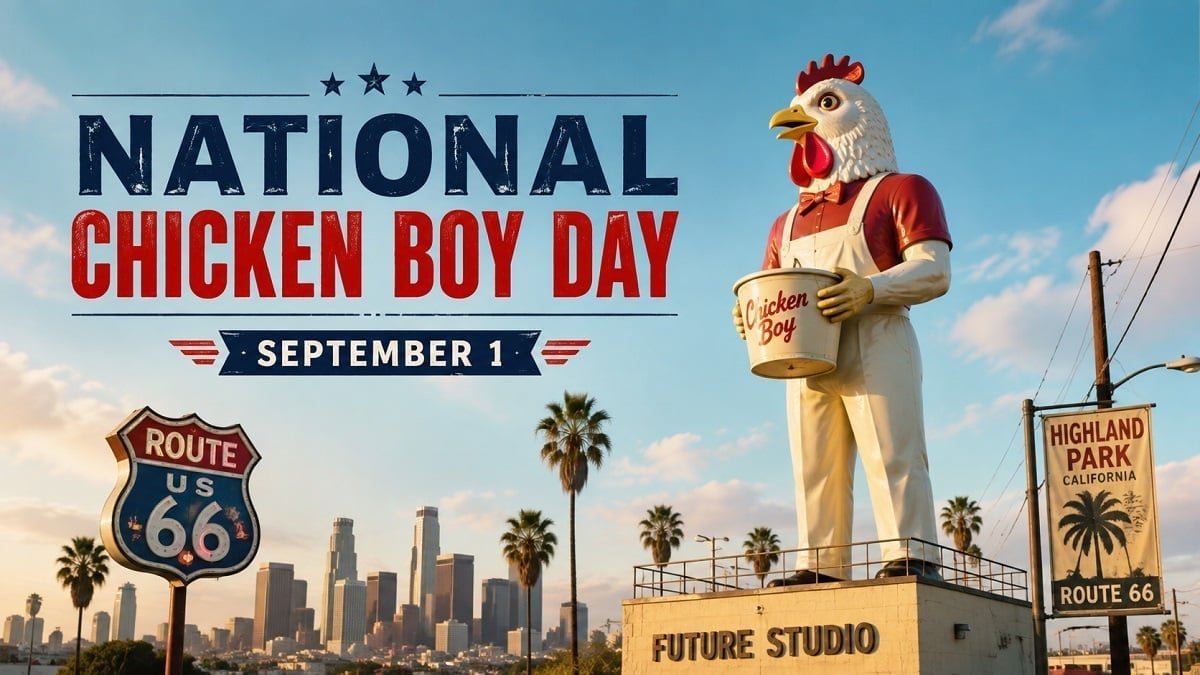 Featured
National Chicken Boy Day, also known as Chicken Boy’s Day, is observed on September 1 to celebrate Los Angeles’ famous 22-foot fiberglass Chicken Boy statue and its remarkable preservation story.
Read the story